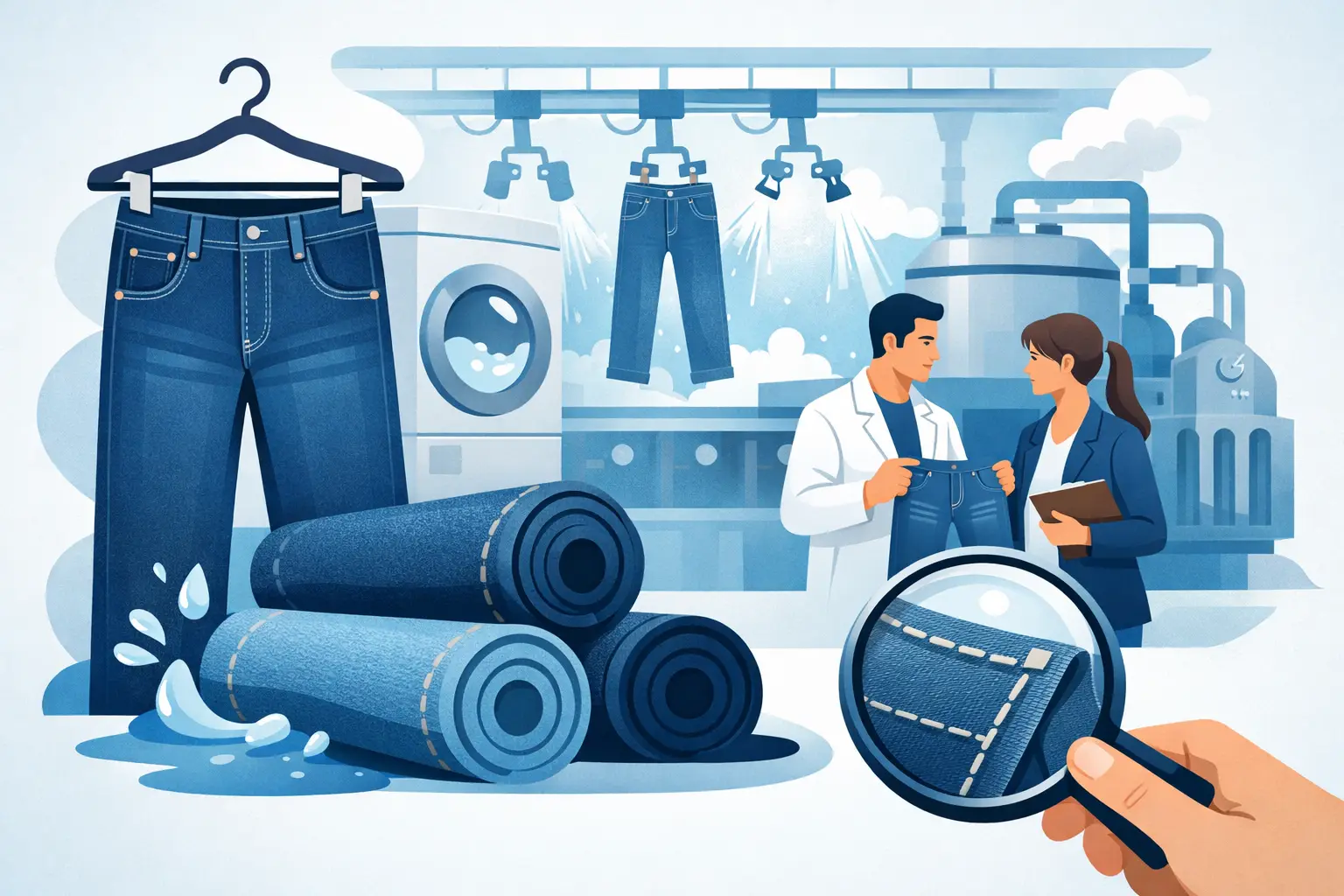
A denim program can look right on a tech pack and still fail at the wash stage. The difference between a sell-through style and a problem SKU often comes down to one decision – choosing the right premium denim wash manufacturer. For brands and sourcing teams, that choice affects hand feel, shade consistency, fit retention, costing, sample speed, and bulk reliability.
Why the wash manufacturer matters so much
In denim, wash development is not a finishing detail. It is a core part of the product. A rinse, enzyme wash, vintage fade, dirty tint, overdyed effect, or heavily destroyed look changes more than appearance. It also influences fabric strength, shrinkage, comfort, and the way a garment performs after repeated wear.
That is why wash capability should be evaluated as a manufacturing function, not a cosmetic add-on. A factory may be able to cut and sew jeans competently, but if its wash process is inconsistent, the end product will still miss the mark. For fashion brands launching seasonal collections or trend-led capsules, this risk is even higher because timing and visual precision matter more.
A qualified premium denim wash manufacturer should be able to translate a reference sample or design brief into a repeatable production standard. That means controlling color variation, tracking process recipes, managing fabric behavior, and protecting fit across sample and bulk runs.
What defines a premium denim wash manufacturer
The word premium gets used loosely in apparel sourcing, so buyers need to define it in operational terms. A premium denim wash manufacturer is not simply a supplier that offers more wash names on a line sheet. It is a production partner with technical wash knowledge, disciplined process control, and the ability to scale quality.
That usually starts with fabric understanding. Different denim weights, fiber blends, constructions, and dye depths react differently to washing. Stretch denim, rigid denim, black sulfur denim, and slub fabrics all require different handling. A manufacturer working at a high level knows how to adjust washing formulas, timing, temperature, abrasion methods, and finishing steps to achieve the target look without damaging the garment.
Premium capability also shows up in development speed. If wash trials take too long or require repeated correction, product calendars slip. For many brands, a fast sample cycle is not just convenient. It is necessary for hitting launch windows, buyer meetings, or wholesale deadlines.
How to evaluate wash development during sampling
Sampling is where a manufacturer proves whether its wash department can execute. Buyers should look beyond the visual result in one approval sample and examine how the factory works to get there.
A strong manufacturer asks specific questions early. What is the target shade after laundering? How much variance is acceptable? Should the hand feel stay crisp or soften? Is there a concern about leg twist, torque, or growth? These are signs that the team is thinking about production reality, not just making a showroom sample.
It also helps to assess how clearly wash comments are managed. Denim development often involves several rounds of revisions – lighter on thigh sanding, cleaner cast, less contrast at seams, reduced whisker depth, softer hand, less back staining. A capable supplier documents these changes accurately and applies them consistently from one sample to the next.
Lead time matters too. If a factory can produce wash samples in 10 to 15 days and still maintain technical accuracy, that gives brands more room to refine fit and merchandising decisions. Speed without control creates problems. Control without speed slows the business. The right balance is what buyers should look for.
Quality control is where premium claims are tested
Many suppliers can create one good-looking sample. The harder question is whether they can hold that standard across bulk production. This is where a premium denim wash manufacturer either proves its value or creates expensive inconsistency.
Bulk wash control depends on repeatable processes. Recipes need to be standardized. Machines need to be calibrated. Operators need clear instructions. Garments need to be checked for shade, measurement change, damage, puckering, and finishing accuracy before packing.
For brands selling across multiple stores or online channels, consistency matters commercially. If one shipment runs darker than the approved standard, customer returns increase. If one size range shrinks more than another after washing, fit complaints follow. These are not minor production issues. They affect margin, brand trust, and reorder confidence.
That is why experienced buyers ask how wash approvals are locked, how pilot runs are checked, and how in-line and final inspections are handled. A factory with serious denim experience will have direct answers, not vague assurances.
Low MOQ and premium washes can work together
Some buyers assume advanced wash development only makes sense at high volume. In practice, that depends on the manufacturer. A flexible factory with integrated denim expertise can support lower MOQs while still delivering strong wash quality, especially for emerging brands, test drops, and seasonal programs.
This matters for modern inventory strategy. Many labels do not want to overcommit before confirming demand. They want to test a fit, a wash direction, or a capsule concept with manageable order quantities. If the supplier insists on oversized minimums, the brand carries unnecessary stock risk. If the supplier accepts small orders but cannot maintain quality, the test becomes unreliable.
A capable partner should be able to support lower-volume development with commercial discipline. That means realistic wash options, clear cost implications, and production planning that protects both flexibility and quality. For many growing brands, this is more valuable than simply finding the lowest price per piece.
Compliance, sustainability, and export readiness
Wash quality is only one part of the sourcing decision. International buyers also need confidence in compliance, communication, and shipping execution. A premium denim wash manufacturer should be ready to support export requirements, documentation standards, and buyer testing expectations.
This is especially relevant when wash processes involve chemicals, abrasion techniques, or special finishes. Buyers may need assurance around restricted substances, process safety, and consistent raw material sourcing. Sustainability goals can add another layer, depending on the brand’s market position and retailer requirements.
The right supplier should be able to explain what is feasible and where trade-offs exist. Some premium visual effects require heavier processing. Some softer or cleaner alternatives may reduce environmental load but produce a different final look. Good manufacturing partners do not oversell. They help buyers make decisions that fit the product brief, price point, and compliance framework.
What experienced buyers ask before placing orders
A sourcing decision becomes clearer when the conversation stays practical. Buyers evaluating a premium denim wash manufacturer should focus on capacity, process control, development speed, and communication quality.
Ask how many denim pieces the factory can produce monthly and whether wash capacity scales with sewing output. Ask how sample comments are recorded and whether approved standards are kept for bulk reference. Ask what happens when fabric behavior changes after a wash trial. Ask how the team manages color consistency across repeat orders.
It is also worth asking about category range. A manufacturer that develops jeans, jackets, skirts, shorts, and related denim items often has a broader understanding of how washes perform across different constructions and silhouettes. That experience can help when building a full collection rather than a single style.
For brands that need OEM or ODM support, development depth matters even more. A manufacturer with pattern making, sourcing, sampling, washing, bulk production, quality control, and shipment coordination under one operating system can reduce delays and miscommunication between separate vendors. Tuopu Apparel works in this model because buyers generally need more than sewing capacity. They need a partner that can move from concept to shipment with fewer handoff risks.
The best manufacturer is the one that fits your program
Not every brand needs the same wash partner. A fashion label focused on aggressive runway-inspired finishes may prioritize wash innovation. A volume retailer may care more about repeatability and cost discipline. A startup may need low MOQ, fast sampling, and direct technical guidance.
That is why the best choice is not the supplier with the broadest claims. It is the manufacturer whose wash capabilities, production structure, and communication style match your business needs. In denim, precision at the wash stage has a direct impact on product quality and speed to market. Buyers who evaluate that capability carefully tend to build stronger collections and more stable supply chains.
If you are comparing suppliers, look past the sample rack and examine the process behind it. That is usually where the right manufacturing partner becomes obvious.
One response
[…] wash sample is an artistic and technical reference, not a guarantee of bulk consistency. Natural denim […]