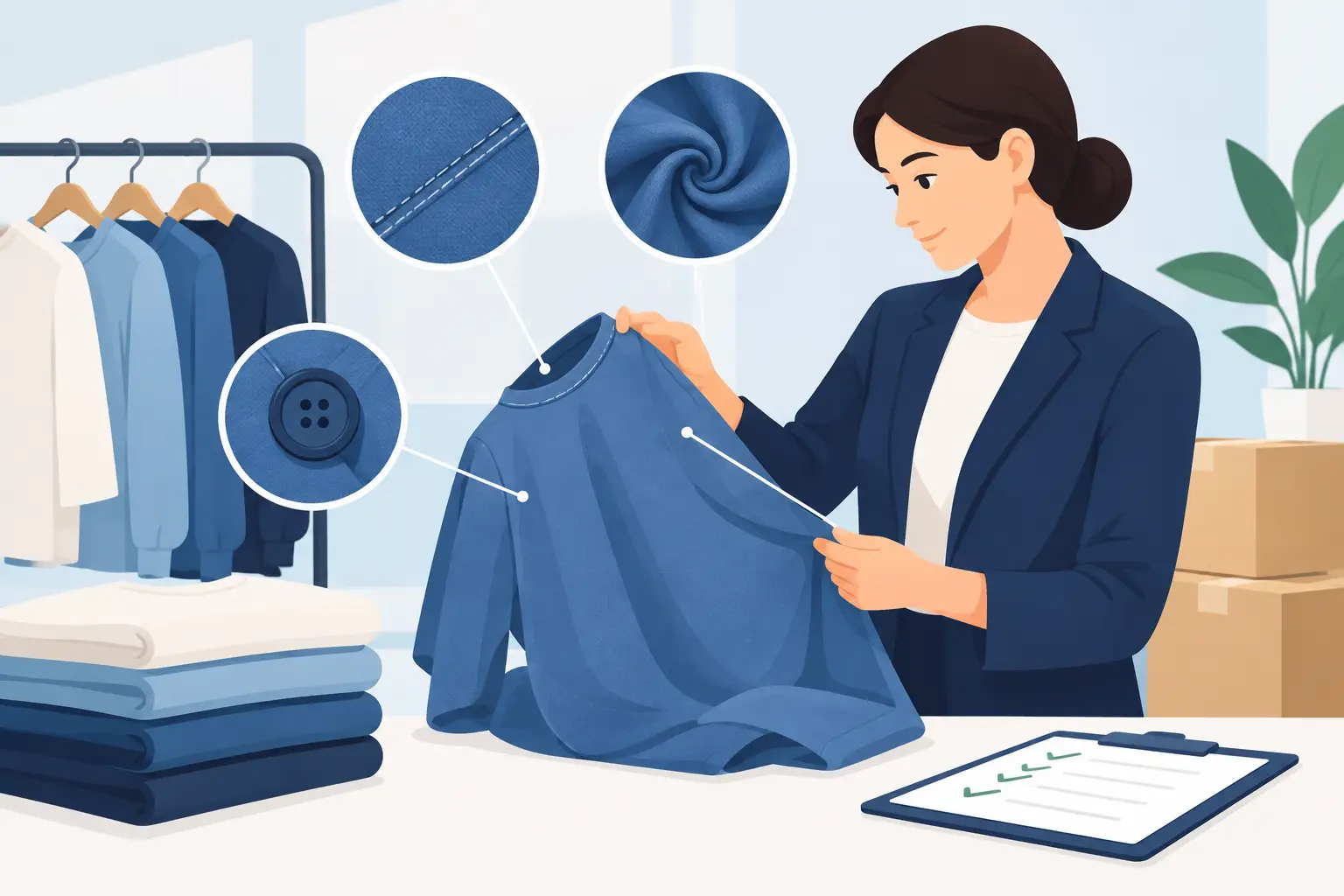
A denim sample can look excellent on a hanger and still fail the first customer wear test. A waistband may twist after laundering, dark indigo may transfer onto light upholstery, or a pocket corner may tear under normal stress. Apparel quality is not a single inspection result. It is the controlled outcome of material selection, product engineering, wash development, production discipline, and final verification.
For fashion brands, wholesalers, and retailers, quality affects more than return rates. It determines whether a product earns repeat orders, whether a new collection can scale confidently, and whether the production cost supports the intended market position. The right standard is not simply “premium.” It is a standard that matches the product, customer, price point, and use case – then remains consistent from approved sample through bulk delivery.
What Apparel Quality Means in Manufacturing
In commercial production, quality is the ability to make garments that consistently meet an agreed specification. That specification includes visible details, but it also covers performance requirements that are easy to miss until the product is in market.
For denim, this begins with the fabric. Fiber composition, yarn quality, fabric weight, weave density, stretch recovery, shrinkage, and shade consistency all affect how jeans or jackets will look and perform. A 12-ounce rigid denim designed for a structured vintage silhouette requires different controls than an 11-ounce comfort-stretch fabric for slim jeans. Neither is automatically better. The correct choice depends on the intended fit, wash, durability target, and retail positioning.
Construction is equally important. Stitch density, seam allowance, thread selection, bartack placement, zipper performance, button attachment, pocket shape, and waistband alignment must work together. A garment can use good fabric and still feel poorly made if these details are inconsistent. On washed denim, quality also includes wash recipe control, abrasion placement, color tone, hand feel, and the balance between a worn appearance and acceptable fabric strength.
A reliable factory turns these expectations into measurable checkpoints rather than relying on visual judgment alone.
Start With a Clear, Testable Specification
Many quality problems begin before cutting starts. A tech pack may show the desired silhouette but omit the details needed to reproduce it across production runs. A reference sample may communicate a wash direction but provide no tolerance for shade variation or no requirement for colorfastness. In those cases, the factory is forced to interpret rather than execute.
A production-ready specification should define fabric composition and weight, approved trim materials, measurement points and tolerances, stitching requirements, label placement, wash appearance, packing method, and applicable testing needs. It should also identify what is non-negotiable. For example, a brand may allow small variation in whisker placement on hand-finished jeans but require strict consistency in inseam length and waist measurement.
This distinction saves time. Not every visual variation is a defect, especially in garment-dyed, distressed, or hand-treated denim. However, critical functional and fit requirements should have tight, documented controls.
Fit Approval Is Not Just a Sample Sign-Off
A fit sample is the first major quality gate. It confirms whether the pattern delivers the intended shape, balance, rise, leg opening, and ease on the appropriate fit model. A single approved size is not enough if grading between sizes has not been checked carefully. Poor grading can create a garment that fits well in a size medium but becomes too tight through the thigh or too long in the rise at larger sizes.
Brands should review fit after the intended wash whenever possible. Denim can change meaningfully through washing, drying, enzyme treatment, bleaching, and finishing. Measuring a garment before wash does not prove how it will fit after wash.
The approved sample should become the production reference. It must be labeled, retained, and compared against bulk output throughout the order. Without a sealed standard, quality decisions can become subjective and inconsistent.
Control Materials Before They Reach the Sewing Line
Fabric and trims account for a large share of both product quality and production risk. A strong quality process starts with incoming material inspection, not final packing inspection.
Fabric should be checked for width, weight, shade, defects, skew, shrinkage, and stretch performance where relevant. For stretch denim, recovery matters as much as initial elongation. Fabric that stretches easily but does not recover can lead to bagged knees, a loose seat, and dissatisfied customers after limited wear.
Shade management deserves special attention in indigo and black denim. Even approved fabric can vary between lots. When panels from different lots are cut into the same garment, variation may become more visible after washing. Lot segregation, shade banding, and controlled cutting plans reduce this risk.
Trims require the same discipline. Zippers should run smoothly and remain secure. Rivets, buttons, and snaps must be attached with appropriate pull strength. Leather or paper patches must tolerate the selected wash process. A trim that looks correct before finishing may crack, bleed, or deform after treatment.
Build Quality Into Denim Construction and Washing
Quality cannot be inspected into a garment at the end of production. It must be built into each operation. Sewing teams need clear operation standards, approved stitch samples, and in-line checks at points where defects are likely to occur.
On jeans, common risk areas include uneven waistband joins, twisted side seams, mismatched yokes, puckering around zippers, uneven hems, skipped stitches, weak pocket corners, and incorrect label positioning. These issues can be prevented more efficiently during sewing than repaired after washing.
Washing adds another layer of complexity. Denim finishing may involve desizing, enzyme washing, stone washing, bleaching, tinting, spraying, hand scraping, laser effects, resin treatment, and softening. Each process can affect shade, hand feel, dimensions, and garment strength.
The goal is repeatability, not identical hand-finishing on every piece. A hand-distressed product will naturally have some variation, but the overall wash character must match the approved standard. Teams should control water temperature, chemical concentration, processing time, machine load, drying conditions, and finishing sequence. They should also verify that wash effects do not create excessive damage at high-stress areas such as knees, pocket edges, and belt loops.
Use Inspection at More Than One Stage
Final inspection is necessary, but it should be the last safeguard rather than the primary quality system. Effective programs use checkpoints across development and production.
During pre-production, teams confirm the approved fabric, trim, pattern, grading, wash standard, packaging, and workmanship requirements. During production, in-line inspectors identify recurring issues before hundreds of pieces are completed. After washing and finishing, garments are checked for measurement, shade, appearance, and damage. Final inspection then verifies the packed order against the agreed acceptance standard.
For export orders, inspection commonly uses an AQL-based sampling approach. The appropriate level depends on the buyer’s requirements, product risk, and order profile. AQL sampling does not replace process control. It provides a structured way to assess a finished lot, while in-line control prevents defects from becoming lot-wide failures.
Measurement control should account for wash tolerance and relaxation. A pair of jeans fresh from finishing may measure differently after resting. Color assessment should use consistent lighting conditions, since a garment can appear acceptable under one light source and noticeably different under another.
Balance Quality With Cost, Speed, and MOQ
Higher apparel quality is not always achieved by adding more expensive components or more inspections. It is achieved by making smart decisions early and controlling the variables that matter most to the product.
A complex wash, specialized stretch fabric, custom hardware, and detailed handwork can produce a distinctive denim program, but each choice adds cost, lead time, and potential variation. For a seasonal capsule or low-volume launch, a brand may prioritize a focused wash library and proven fabric base to protect speed and consistency. For a core bestseller, it may be worth investing in extensive wear testing, tighter shade standards, and deeper material validation.
Low MOQs require particular care. Smaller runs give brands more inventory flexibility, but they can make custom material sourcing and wash consistency harder if the factory lacks established denim capabilities. The solution is not to lower the quality bar. It is to select a manufacturing partner that can advise on practical fabric minimums, existing material options, sampling feasibility, and scalable production methods.
Make Quality a Shared Operating System
The strongest supplier relationships treat quality as a shared operating system, not a final negotiation. Brands need to communicate product intent precisely, provide timely approvals, and distinguish critical defects from acceptable handcrafted variation. Manufacturers need to translate those requirements into workable standards, identify risk before bulk production, and maintain traceable controls through shipment.
At Tuopu Apparel, denim development is managed from sourcing and pattern making through sampling, bulk production, wash control, inspection, and global shipment. That integrated approach matters because a fit decision, fabric change, or wash adjustment affects every stage that follows.
The practical next step for any brand is simple: define the quality level before issuing the purchase order, then choose a production process capable of proving it at every gate. That is how a promising sample becomes a dependable product customers want to buy again.
One response
[…] wash recipes, controlled fabric sourcing, size-spec grading, pre-production approvals, and final inspection standards. When those elements are in place, a factory can produce a 300-piece order with the same technical […]