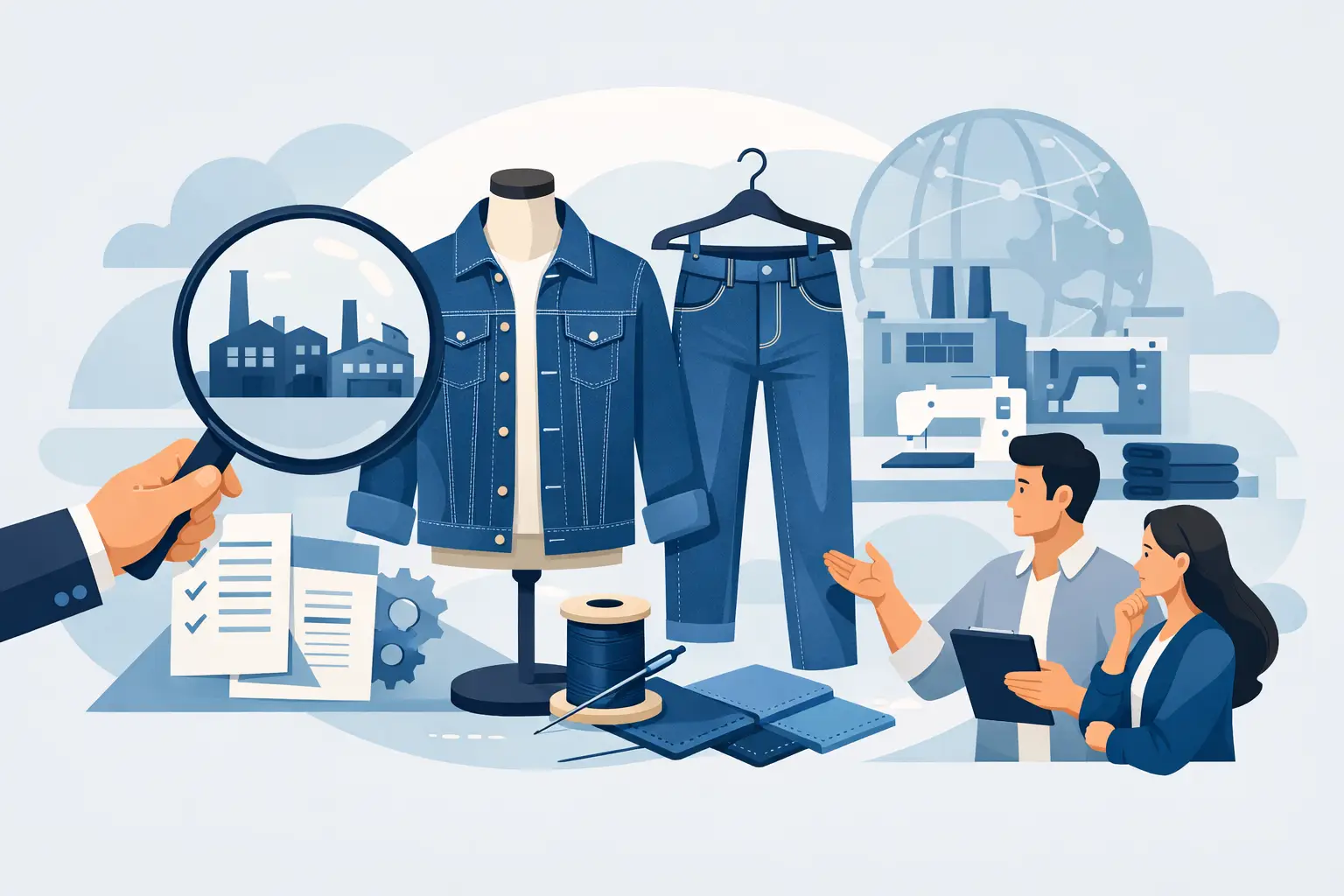
A late sample, an inconsistent wash, or a factory that overpromises on MOQ can derail an entire denim program before bulk production even starts. That is why choosing the right OEM denim manufacturer is not just a sourcing task. It is a commercial decision that affects margin, launch timing, quality consistency, and inventory risk.
For fashion brands, wholesalers, and retail buyers, denim is rarely forgiving. Fit must be precise. Washes must be repeatable. Fabric behavior must be understood before grading and bulk cutting begin. If your supplier lacks denim-specific experience, problems tend to show up where they are most expensive – after approval, during production, or at the final inspection stage.
What an OEM denim manufacturer actually does
An OEM denim manufacturer produces garments based on the buyer’s design, specifications, branding, and commercial requirements. In practical terms, that means the factory is responsible for turning your concept into production-ready denim while following your measurements, construction details, trims, labels, wash standards, and packaging needs.
For buyers, the value of OEM is control. You keep ownership of the product direction while using the factory’s technical and production infrastructure to execute it. That matters in denim because good execution is not limited to sewing. It also includes fabric sourcing, shrinkage control, fit correction, wash development, hardware matching, pattern refinement, and quality management through bulk production.
Some suppliers also support development services that overlap with ODM capabilities, such as material suggestions, wash recommendations, or fit optimization. That can be useful, especially for newer brands or lean product teams. Still, if you are evaluating an OEM partner, the core question remains the same: can this factory reliably produce your denim product to spec, at the right speed, volume, and quality level?
Why denim specialization matters more than general apparel capacity
A factory may be strong in woven apparel and still be the wrong fit for denim. Denim production carries technical variables that general cut-and-sew manufacturers do not always manage well. Fabric weight, stretch recovery, indigo behavior, garment wash effects, seam torque, and shade consistency all influence the final product.
That is why a specialized OEM denim manufacturer usually brings a meaningful advantage. The team understands how a pattern changes after washing. They know how to balance fashion washes with commercial repeatability. They can flag construction details that look good on a tech pack but perform poorly in production.
This reduces development friction. It also reduces expensive revisions. A supplier with real denim depth will often identify risks before the sample stage drags on for weeks.
The selection criteria that actually affect outcomes
Price matters, but denim sourcing decisions should not be based on unit cost alone. The lowest quote can become the most expensive option if the factory misses delivery windows or cannot hold quality standards in bulk.
MOQ should fit your growth stage
Minimum order quantity is one of the first filters, especially for emerging brands and seasonal drops. If a factory requires volumes that exceed your sell-through confidence, you are taking on unnecessary inventory pressure. A lower MOQ gives you room to test fits, washes, and categories without overcommitting cash.
That said, lower MOQ is not automatically better in every case. Very small runs can raise unit cost and narrow fabric options. The right balance depends on whether you are launching a capsule, replenishing proven sellers, or building a broad seasonal line.
Sampling speed is a real business metric
In denim, delays usually start in development. Slow sample turnaround can push back approvals, photography, sales meetings, and launch dates. A responsive OEM denim manufacturer should be able to manage pattern development, sample sewing, wash trials, and revision cycles without creating unnecessary lag.
Fast sampling only helps if the output is accurate. A quick sample that ignores measurements or wash standards just creates another round of corrections. Buyers should evaluate both lead time and technical hit rate.
Wash capability is a core competence, not an extra feature
Most denim products are sold on fit and wash. If the wash is off, the product is off. Factories with strong wash development capability can help translate a reference image into a workable production standard while controlling tone, contrast, hand feel, and consistency.
This is where experience shows. Premium-looking washes require more than visual imitation. They require process control across sampling and bulk, especially when garments involve stretch denim, destructive details, coatings, enzyme treatments, or vintage effects.
Capacity matters if your business is scaling
A factory that can handle your opening order may not be able to support repeat business or seasonal expansion. That creates a hidden sourcing problem. Once a style performs well, you need a production partner that can scale without sacrificing quality or extending lead times beyond what your market can tolerate.
Capacity should be viewed alongside planning discipline. Large monthly output is useful only if the manufacturer can schedule production responsibly and communicate realistic booking windows.
Export reliability is part of product delivery
For international buyers, manufacturing does not end at carton packing. Documentation, labeling compliance, inspection coordination, and shipment management all affect whether goods arrive on time and clear efficiently. A technically strong factory with weak export handling can still create supply chain risk.
This is one reason buyers often prefer integrated suppliers. Fewer handoffs typically mean fewer errors.
What to ask before approving a denim factory
The best supplier evaluations go beyond a capability presentation. Buyers should ask direct, operational questions that reveal how the manufacturer actually works.
Ask how the factory manages fit approvals after wash. Ask what denim categories they produce most often and at what volume. Ask how they control shade consistency in bulk. Ask what their standard sample timeline looks like, how many revision rounds are typical, and what can cause delays.
It also helps to ask how they handle fabric sourcing for low-volume programs, whether they support custom trims, and how quality issues are tracked during production. These questions are practical, but they reveal maturity. A serious OEM denim manufacturer should be able to answer them clearly.
Red flags buyers should not ignore
Some warning signs appear early. Vague answers on sampling lead time, no clear process for wash approvals, or unrealistic promises on pricing and delivery usually signal trouble later.
Another red flag is weak denim communication. If the supplier cannot discuss fabric composition, shrinkage expectations, construction methods, or wash limitations in concrete terms, they may not have the technical control your product requires.
Buyers should also be cautious when a factory says yes to everything. Good manufacturers push back when necessary. They explain trade-offs between cost, speed, appearance, and production stability. That is not resistance. It is process discipline.
What strong OEM denim manufacturing looks like in practice
A dependable partner typically offers more than sewing capacity. They support the full chain from concept clarification through sourcing, pattern making, sample development, bulk production, quality control, and shipment coordination. That end-to-end structure reduces miscommunication and shortens the distance between design intent and finished product.
For example, a brand developing jeans, jackets, skirts, and shorts across multiple washes needs consistency across categories, not just within one SKU. The right factory can align grading, fabric behavior, hardware sourcing, and wash standards across the line so the collection feels commercially cohesive.
This is where a specialized supplier such as Tuopu Apparel can be relevant for buyers who need both flexibility and scale. A 300-piece MOQ, 10-15 day sample lead times, deep wash expertise, and production capacity above 200,000 pieces per month speak directly to the sourcing pressures many growing brands face.
The best fit depends on your business model
There is no universal best OEM denim manufacturer. The right choice depends on what you are trying to build. A startup label may prioritize low MOQ and development support. An established retailer may care more about repeatability, compliance, and large-volume scheduling. A trend-led DTC brand may put sampling speed and wash execution at the top of the list.
That is why factory selection should start with internal clarity. Know your target price architecture, expected order flow, required lead times, and tolerance for inventory risk. Once those are defined, it becomes easier to identify which manufacturer is actually built for your business.
A good denim factory makes products. A strong OEM partner makes planning easier, launches more reliable, and growth more manageable. When the supplier can consistently convert design intent into market-ready denim without adding operational drag, your team has more room to focus on selling the line instead of fixing the supply chain.
No responses yet