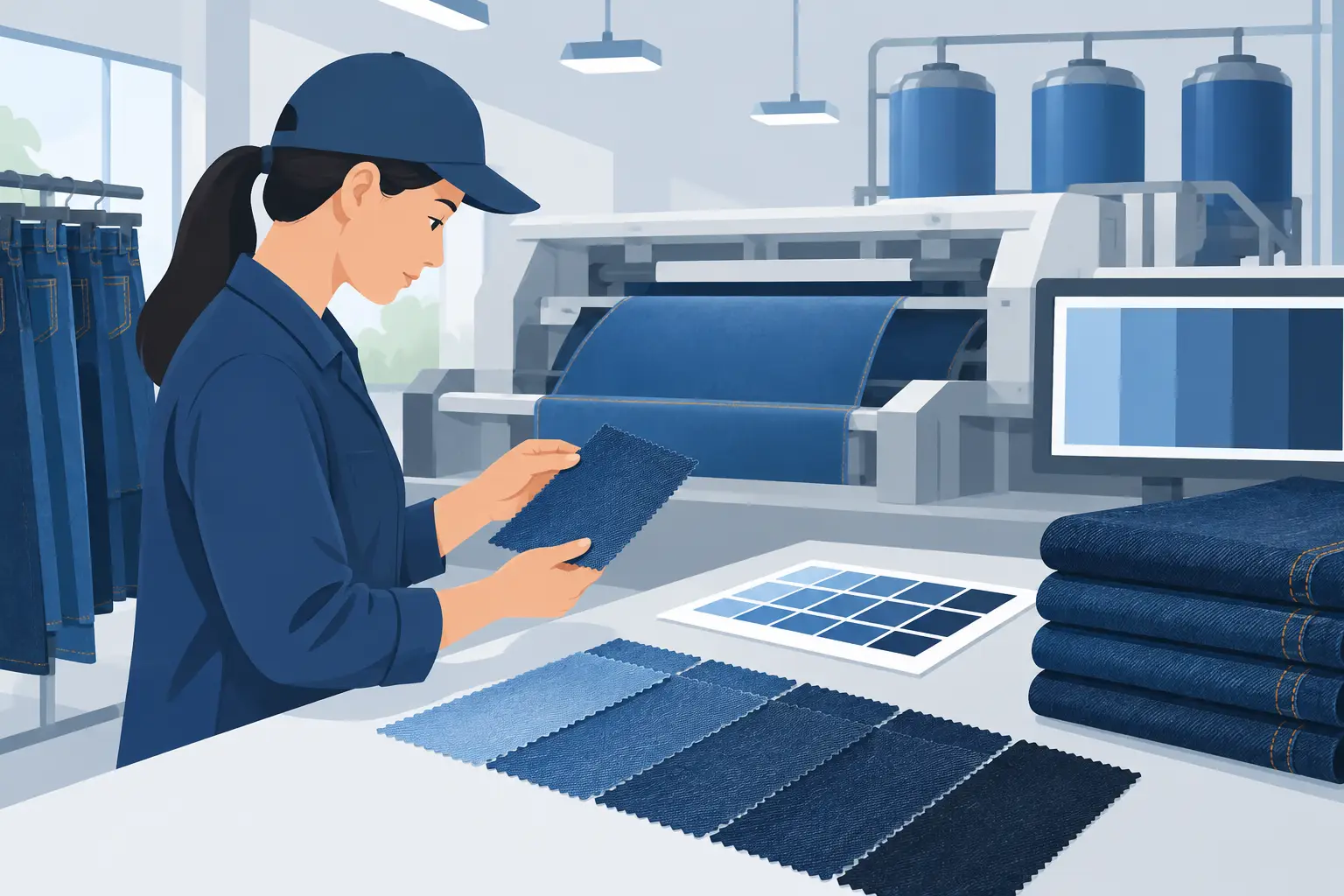
A shade approved in a showroom can become a costly problem when 3,000 pairs arrive with visible variation from one carton to the next. So, can denim factories match color standards? Yes, but the answer depends on how early color is defined, how rigorously it is measured, and whether the factory controls every stage from fabric sourcing through washing and final inspection.
For denim brands, color consistency is not simply a visual preference. It affects product approvals, ecommerce photography, retail presentation, repeat-order reliability, and customer returns. Indigo denim is especially complex because its final appearance is shaped by yarn dyeing, fabric construction, garment washing, abrasion, chemical treatment, and drying. A capable factory treats color as a managed production standard, not a result to judge only after bulk goods are finished.
Why Denim Color Matching Is More Complex Than It Looks
A solid-dyed cotton T-shirt can be matched primarily through fabric color. Denim requires a broader view. The same indigo fabric can produce noticeably different results after enzyme washing, stone washing, bleaching, sanding, whiskering, laser finishing, resin application, tinting, or over-dyeing.
Fabric lot variation is one of the first risks. Even when a mill uses the same nominal indigo recipe, changes in yarn origin, yarn count, dyeing conditions, and warp coverage can affect the base tone. The weft yarn also matters. A natural, ecru, gray, or black weft can change how a finished blue reads to the eye, particularly after fading.
Garment construction introduces another variable. Pocket layers, seam density, thread color, labels, and trims can all influence the perceived shade. Then the wash process creates localized contrast. A heavily faded thigh, bright seam edge, or darker waistband may be intentional, but it must be controlled against the approved wash standard.
This is why an approved swatch alone is rarely enough. For denim, the standard should define both the overall shade and the expected wash character.
Can Denim Factories Match Color Standards in Bulk?
They can when color matching is built into product development and bulk production controls. The most reliable approach is to approve a physical reference, document measurable tolerances, and maintain a controlled process for fabric, wash, and finishing.
In practice, brands should provide a clear color target before sampling begins. This may be an approved original garment, a cut swatch, a Pantone reference for direction, a previous-season sample, or a lab-dip standard. A Pantone number can be useful for communication, but it is not sufficient by itself for washed denim. Pantone references are generally designed for flat color communication, while denim’s character is created by uneven dye distribution and surface fading.
The factory should then produce development samples that use the intended fabric construction and wash route. Approving a sample made with substitute fabric or a simplified wash may save time early, but it creates avoidable risk before bulk production.
Once the sample is approved, the factory should retain a sealed standard. This is the benchmark used by the development, washing, quality control, and production teams. It should include notes on fabric composition, weight, color direction, wash recipe, trim specification, and the required finish. Clear documentation prevents the standard from changing through verbal comments as the order moves between departments.
The Controls That Protect Color Consistency
Color control starts with incoming material inspection. Fabric should be checked by roll and by lot before cutting. The team compares the fabric against the approved base standard, reviews its shade under controlled lighting, and separates material that falls outside the agreed tolerance. Mixing fabric lots indiscriminately on the same production order can create visible panel-to-panel or garment-to-garment variation.
Instrumental measurement adds useful discipline. A spectrophotometer can measure color using Lab* values and calculate Delta E differences between a production sample and the approved standard. This helps reduce subjective decisions, particularly when multiple teams are evaluating a dark indigo or black denim shade.
However, instrument readings should not replace visual assessment. Denim has texture, twill direction, surface irregularity, and wash effects that can alter perceived color. A factory should assess both measured data and visual appearance under standard light conditions, commonly including daylight simulation. For washed garments, the approval team must also look at placement, contrast, cast, and overall visual balance.
The wash recipe is equally critical. It should specify water ratio, chemical dosage, temperature, processing time, machine load, stone quantity where applicable, neutralization, tinting, softener use, and drying method. Small adjustments in any of these variables can move the finished result lighter, darker, warmer, cooler, cleaner, or more yellow.
Machine loading deserves particular attention. A wash formula that performs well on a small sample run may behave differently in a full-capacity bulk machine. Factories with denim experience validate recipes at production scale and run pre-production testing before releasing the full order. This is one reason a production-ready pre-production sample is more valuable than an early development sample alone.
Set Realistic Tolerances Before Production Begins
Exact duplication is not always commercially realistic, especially for authentic indigo washes. Denim is expected to have some natural character, and a brand that requests zero visual variation may create a standard that is expensive to achieve without improving the product’s market value.
The better approach is to define acceptable variation. For example, the brand and factory may approve a range around the target garment: one limit slightly lighter, one slightly darker, and notes on acceptable wash contrast. This is often called a shade band or wash range. It gives quality teams a practical decision standard during bulk inspection.
Tolerance should vary by product type. A clean, dark rinse jean for a uniform retail program generally needs tighter control than a fashion jean with heavy bleaching and hand-sanded effects. Black denim can also require close monitoring because slight red, green, or brown casts become obvious under retail lighting. White and ecru denim require attention to cleanliness, yellowing, and contamination from processing.
Brands should also distinguish between intentional variation and uncontrolled variation. A vintage wash may feature irregular fading by design, but every garment should still sit within the approved visual family. Randomness without a controlled reference does not read as premium authenticity. It reads as inconsistent production.
How Buyers Can Improve Approval Accuracy
The buyer’s approval process has a direct effect on final color performance. Vague comments such as “a little bluer” or “make it more vintage” leave too much room for interpretation. The most efficient feedback identifies the required adjustment: darker overall body, less yellow cast, reduced whisker contrast, cleaner pocket edge, or more even back-panel tone.
It also helps to approve color in the final intended context. Review the garment against the planned fabric, wash, thread, hardware, and trim package. If the collection includes matching denim jackets, jeans, skirts, or shorts, assess the group together. Different garment shapes and wash loads may produce slight differences, so coordinated sets need specific cross-style approval.
For repeat programs, retain the approved standard and reference it for every reorder. A previous production shipment is not automatically the correct target if the brand has since adjusted its visual direction. The factory should know which sealed sample, approved shade band, and wash specification control the new order.
At Tuopu Apparel, color control is managed through the full denim development process: fabric selection, pattern and sample development, wash testing, pre-production approval, in-line checks, and final inspection. This integrated approach is particularly useful for brands that need low-MOQ flexibility without losing control of a collection’s visual consistency.
When Color Matching Requires Extra Planning
Some programs need more lead time and more testing than others. Garment-dyed denim, sulfur black, coated finishes, bright fashion colors, heavy bleach effects, and two-tone treatments can all increase development complexity. So can tight delivery windows that leave no room for wash revisions.
Color matching may also depend on the factory’s supply chain. If the specified denim fabric is unavailable and a substitute is proposed, the wash result must be revalidated. Similar weight and composition do not guarantee the same color response. A change in cotton blend, yarn structure, or mill finishing can alter indigo absorption and fading behavior.
For seasonal capsules and first-time orders, the practical answer is to allow enough time for at least one sample revision and a production-scale wash confirmation. Fast sampling is valuable, but rushing bulk before the final wash is locked creates more delay later through rework, claims, or rejected goods.
The right question is not whether every denim garment can look perfectly identical. It is whether every unit can meet a clearly approved standard that supports your brand’s product promise. With the right fabric controls, wash validation, measurable tolerances, and disciplined approval process, denim color can be managed with confidence from the first sample to the final shipment.
One response
[…] wash consistency depends on a chain of controlled variables. Fabric lot variation changes the starting shade and indigo behavior. Garment weight per load affects abrasion and […]