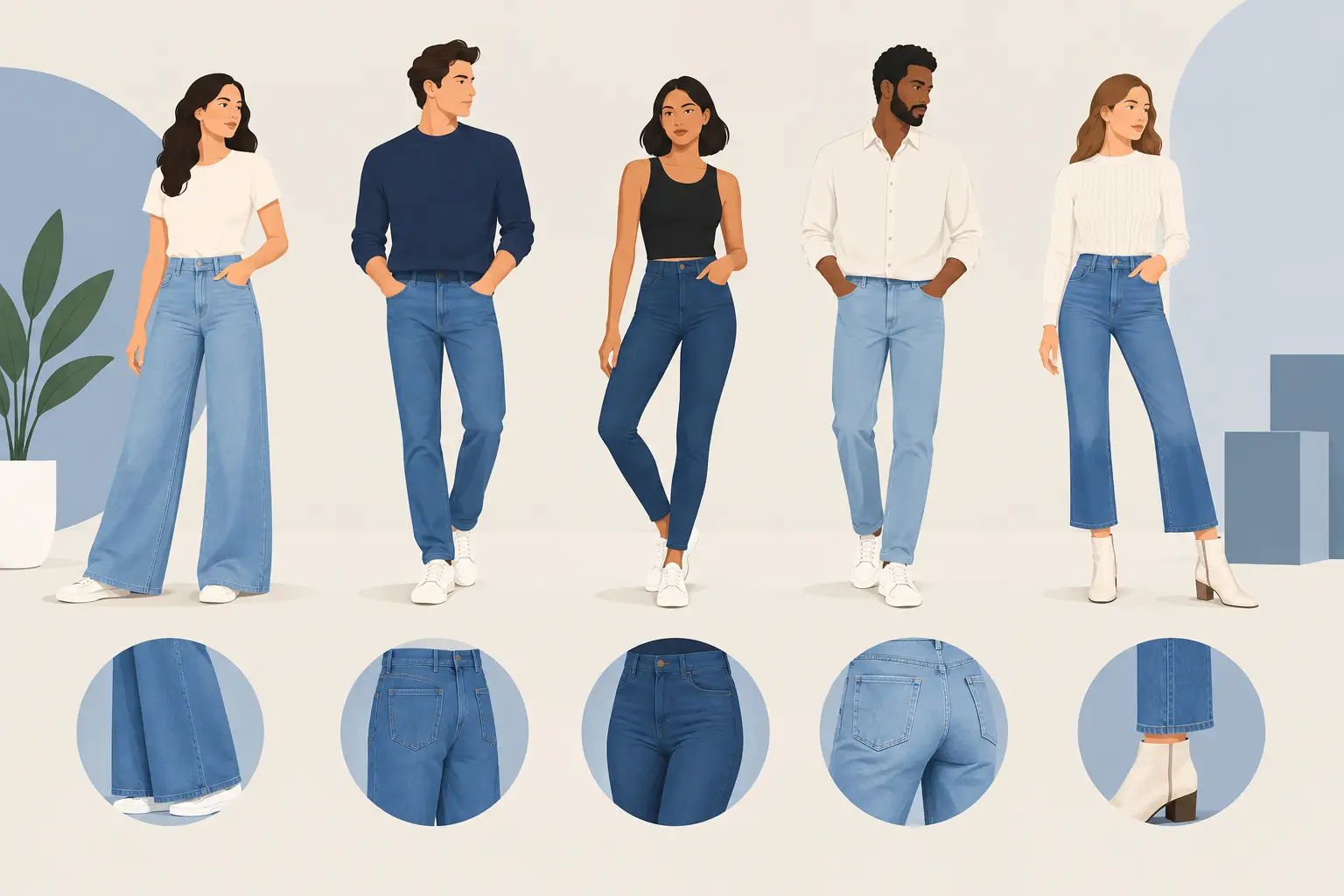
A denim collection can have an excellent wash, premium fabric, and strong branding, yet still miss its sales target because the silhouette is wrong. The best jean fits are not universal bestsellers. They are the fits that match your customer, price point, styling direction, and production strategy while delivering consistent wearability across sizes.
For fashion brands and wholesale buyers, fit selection should begin before fabric is ordered or a wash recipe is approved. A strong jean fit becomes a reusable development block that supports seasonal colors, washes, and trims. A weak fit creates repeated sample revisions, inconsistent grading, avoidable returns, and excess inventory.
How to Choose the Best Jean Fits for Your Brand
Start with the role denim plays in the collection. A contemporary women’s label may need a high-rise straight jean as its commercial anchor, then add a wide-leg fashion fit for seasonal relevance. A menswear brand focused on modern essentials may prioritize a slim-straight fit over an aggressively skinny silhouette. A youth-oriented retailer may place more volume behind baggy, carpenter, or relaxed fits, but still benefit from one cleaner option for broader customer appeal.
The best decision depends on customer behavior, not runway imagery alone. Review your existing sell-through data, return comments, competitor assortment, and styling direction. If the brand is new, define a clear wearer profile: body type range, preferred rise, everyday use case, footwear pairing, and tolerance for oversized volume. These details give product developers a more useful brief than simply requesting a “trendy loose jean.”
Commercial fit planning also requires range discipline. Launching six silhouettes with small quantities can dilute development resources and make size management more difficult. For many developing denim programs, two to four core fits provide a stronger base: one reliable volume driver, one directional fit, one comfort-focused option, and, where relevant, a gender-specific or category-specific style.
The Core Jean Fits Buyers Should Understand
Skinny and slim jeans
Skinny jeans follow the leg closely from hip to hem, usually with meaningful stretch recovery. They remain relevant in select markets, particularly for polished styling, boots, and customers who prefer a body-conscious shape. Their trade-off is narrow fit tolerance. Small changes to thigh, knee, or calf measurements can significantly affect comfort and return rates.
Slim jeans offer a cleaner alternative. They fit closer through the hip and thigh than straight jeans but retain more room below the knee. For men’s and unisex programs, a slim fit can be commercially dependable when the target customer wants a neat silhouette without the restriction associated with super-skinny denim.
Straight and slim-straight jeans
Straight jeans maintain a relatively consistent leg width from thigh to hem. They have become a dependable foundation for both women’s and men’s collections because they are easy to style, wearable across age groups, and suitable for numerous washes.
A slim-straight version narrows the silhouette slightly while preserving the visual balance of a straight leg. This fit is often a practical choice for brands moving away from skinny jeans without shifting fully into relaxed proportions. Its success depends on accurate thigh ease and a hem opening that works with the intended footwear.
Relaxed and loose jeans
Relaxed jeans add ease through the seat and thigh, creating a comfortable profile without necessarily becoming oversized. Loose jeans take the volume further, often with a wider leg opening and more pronounced drape. Both can work in rigid denim, soft cotton denim, or denim blended with lyocell, depending on the desired hand feel.
These fits require careful proportion control. If the rise, thigh, and inseam are all enlarged without a clear design balance, the garment can look shapeless rather than intentional. Pocket scale, yoke shape, back-rise curve, and hem width all influence whether a loose jean feels premium and current.
Wide-leg and flare jeans
Wide-leg jeans create volume from the hip or thigh through the hem. They can range from tailored and refined to exaggerated and fashion-led. The best wide-leg fit for a collection depends heavily on rise and fabric weight. A high-rise wide leg in structured denim creates a defined waist and architectural shape, while a mid-rise version in softer denim feels more relaxed.
Flare and bootcut jeans are fitted through the upper leg before opening below the knee. They work particularly well when the pattern creates a smooth line through the knee and a controlled flare at the hem. Too little opening can look accidental; too much can limit the style’s commercial reach. Heel height and intended inseam should be specified early, especially for women’s programs.
Tapered, barrel, and carpenter fits
Tapered jeans provide room through the upper leg and narrow toward the ankle. They are functional for customers who want comfort in the thigh while maintaining a concise silhouette. Barrel jeans use a curved outer leg and a narrowed hem to create a rounded shape. They are more design-sensitive and require accurate pattern work to avoid twisting or awkward side seams.
Carpenter and workwear-inspired fits typically feature relaxed proportions plus utility details such as patch pockets, hammer loops, reinforced panels, or contrast stitching. These details add production steps and should be quoted with the complete construction package, not treated as minor decorations.
Fit Is More Than a Silhouette Name
Terms such as “high rise,” “relaxed,” and “wide leg” provide direction, but they are not production specifications. Two jeans labeled as high-rise straight can fit entirely differently. A factory needs measurable targets, fit references, and clear construction expectations.
A complete tech pack should identify front rise, back rise, waist, hip, thigh, knee, hem opening, inseam, and target garment measurements for the base size. It should also define tolerance standards. Denim fit is especially sensitive to wash shrinkage, so pre-wash and post-wash measurement expectations must be aligned before bulk production.
The fabric choice changes the outcome as much as the pattern. Rigid 100% cotton denim holds structure and can develop strong wash character, but it offers less forgiveness in close-fitting styles. Comfort-stretch denim supports slim and skinny fits, although insufficient recovery can cause bagging at the knee and seat. Lightweight denim may suit wide-leg summer styles but may not hold a dramatic barrel shape. Product developers should evaluate fabric and fit as one system.
Build a Fit Development Process That Reduces Risk
The fastest route to a reliable fit is not skipping samples. It is making each sample stage answer a specific question. The first prototype establishes silhouette, construction, and approximate proportions. The fit sample corrects measurements and balance on the intended fit model. The wash sample confirms shrinkage, hand feel, color, and final appearance. A pre-production sample verifies that approved details can be repeated in bulk.
Use a fit model whose body measurements reflect the target customer rather than choosing solely by nominal size. Evaluate front and back balance, crotch comfort, waistband stability, pocket placement, side-seam behavior, and leg twist after washing. Have the model sit, walk, bend, and wear the garment for a reasonable period. A jean that looks correct in a standing photo may fail under normal movement.
Size grading deserves the same attention as the base size. A size medium that fits well does not guarantee a usable size run. Rise, thigh, hip, and inseam increments must be developed for the customer profile and fit category. Oversized fits can still become restrictive in larger sizes if the grade rules are too conservative. Conversely, excessive grading can make smaller sizes lose the intended silhouette.
For brands working on short seasonal calendars, manufacturing capability matters. A specialist denim partner can translate a fit reference into a pattern, recommend suitable fabric weights and stretch levels, manage wash testing, and maintain measurement control from sample approval through bulk shipment. Tuopu Apparel supports this process with low-MOQ development, 10-15 day sampling, and denim-focused production capacity, helping buyers test focused fit programs before committing to larger inventory positions.
Choose a Core Fit Before Chasing Every Trend
Trend-led fits create attention, but core fits create continuity. A well-developed straight, relaxed, or slim-straight jean can return in multiple washes and seasonal updates, giving the brand a stable product platform. Directional shapes such as extreme baggy, barrel, or flare styles can then add fashion energy without carrying the entire denim business.
The most effective next step is to select one silhouette with clear commercial potential and develop it with full technical discipline. Get the rise, balance, fabric recovery, wash shrinkage, and grade rules right. Once that fit earns repeat orders, it becomes more than a style – it becomes a dependable foundation for the collection.
No responses yet